The concept of a fixed retirement age was introduced decades ago, at a time when life expectancy was significantly lower and most people were not expected to rely on retirement income for long periods. In today’s South Africa, many citizens remain healthy, skilled, and economically active well into their late sixties. Rising inflation, increasing healthcare costs, and changing family responsibilities have made a rigid retirement age unrealistic for many households.

No More Retirement
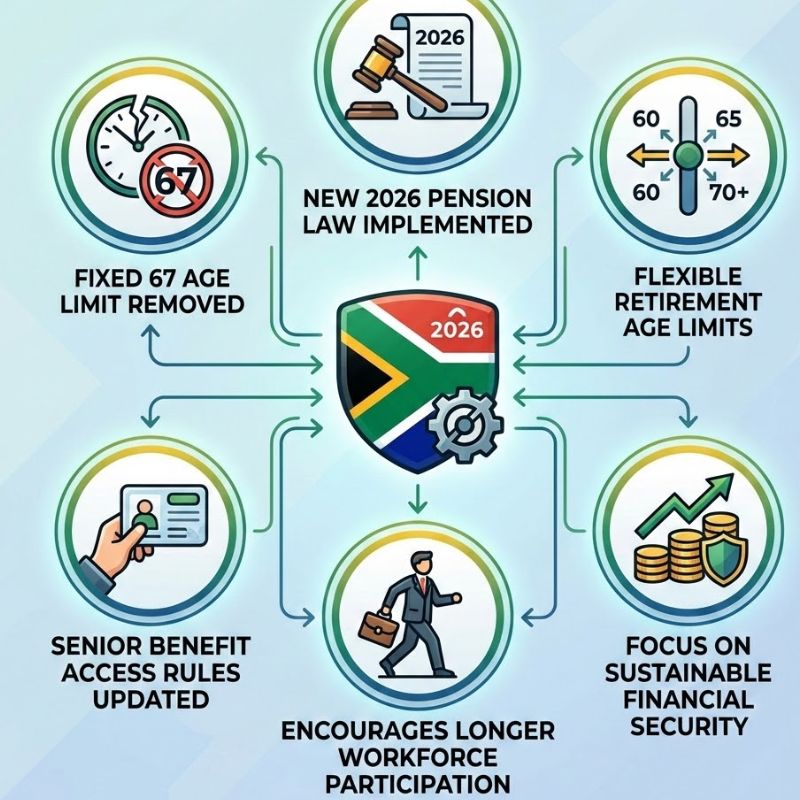
Under the 2026 pension legislation, South Africa has moved away from strict retirement age requirements and shifted toward individual choice. Seniors are no longer automatically required to retire at age 67. Instead, they can decide for themselves based on their health, financial situation, and personal desire to continue working. This approach allows older individuals to remain economically active on their own terms.

How the Changes Affect Elderly Benefits and Pensions
The updated rules do not prevent elderly South Africans from accessing pension benefits when they meet eligibility requirements. Instead, the reforms aim to keep senior benefits financially sustainable while supporting individuals who choose to retire later than the traditional age. Pension access remains protected even as retirement timelines become more flexible.

Direct Impact on Workers and Employers
This reform restores dignity and choice to working individuals by allowing them to control how and when they retire. Workers who wish to remain employed longer no longer face automatic retirement. Employers also benefit by retaining experienced staff, preserving institutional knowledge, and creating roles better suited to an aging workforce.

Why Financial Planning Is Now Essential
Retirement planning has become more flexible, but also more personal. Individuals can now retire at different stages of life instead of following a fixed age rule. As a result, people must plan proactively and make informed decisions about income, savings, and work rather than waiting for a predetermined retirement date.
Broader Social and Economic Implications
This reform marks the first step in a broader set of policy changes related to aging in South Africa. Previous assumptions around age limits and employment no longer apply. The new framework balances the abilities of older workers with their economic contributions and social inclusion. It recognizes that senior employees can continue to add value to the workforce while remaining active members of society, supporting both economic growth and community well-being.