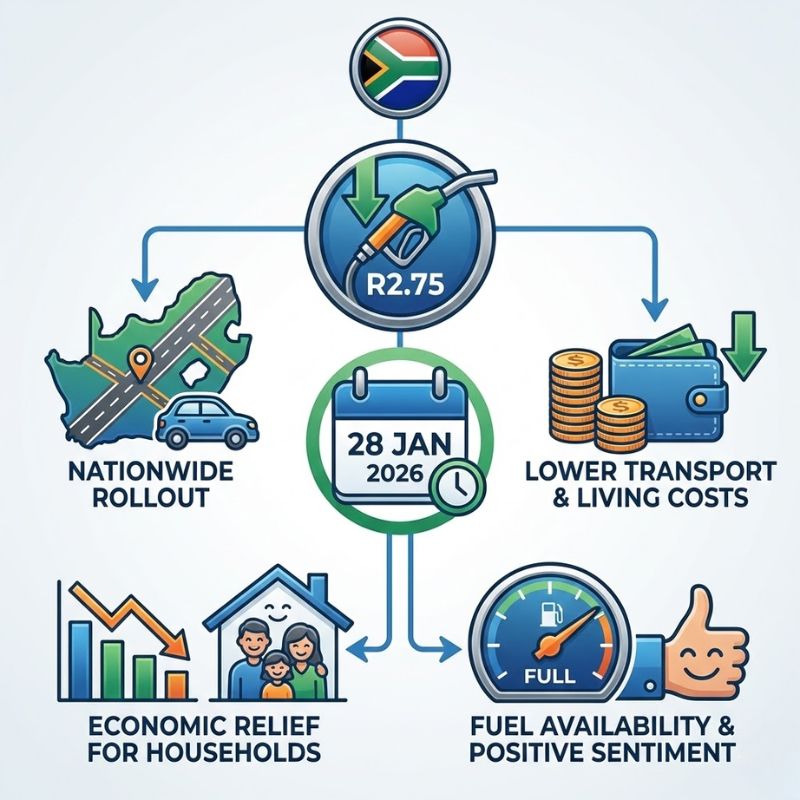
South Africa will experience relief at fuel stations when petrol prices drop by R2.75 starting on 28 January 2026. This decrease comes after global oil prices fell consistently and the rand became more stable. The change reduces financial strain on transportation and daily living expenses across the country. The price cut provides much-needed relief for families & workers who commute as well as businesses that have dealt with expensive fuel costs for several months. Since petrol prices affect the cost of food and travel along with various service charges this reduction should create positive effects throughout the economy. Millions of South Africans will find their daily expenses somewhat easier to manage as a result of this adjustment.

R2.75 petrol price cut offers nationwide relief
The R2.75 petrol price reduction brings welcome relief to motorists who have been coping with rising day-to-day costs. Implemented as a January adjustment, the decrease reflects improved global oil supply conditions and steadier currency movements. For many households, cheaper fuel means reduced monthly pressure on already tight budgets. Taxi operators and delivery drivers, who depend heavily on fuel, are also expected to experience immediate financial relief. Although the cut does not undo previous increases, it marks a positive shift that may help rebuild confidence among road users who have adjusted travel habits over the past year.

How lower petrol prices influence transport and travel costs
Cheaper fuel typically eases pressure across public and private transport. With lower pump prices, commuters may see slower increases in taxi fares and bus fees, offering some relief for workers who travel daily. Logistics providers may also scale back fuel surcharges, helping to stabilise delivery charges. While fare reductions are not guaranteed, the petrol cut reduces strain on operators working with thin margins. Over time, this can support more predictable pricing across the transport sector, allowing commuters to plan expenses with greater certainty.

Impact of the fuel price drop on businesses and inflation
The petrol price cut also lowers operating costs for businesses that rely on transport and distribution. Reduced fuel expenses can create supply-chain savings, which may help slow price increases for groceries and essential goods. While a single adjustment will not reverse inflation, it contributes to broader price stability by easing one of the economy’s most volatile cost drivers. Small businesses benefit in particular from more predictable fuel pricing, supporting improved cash-flow planning.

What the petrol price adjustment means for South Africa
This latest change provides much-needed breathing room for households under financial strain. Lower fuel costs can help restore consumer confidence, encouraging steadier spending rather than constant cutbacks. The adjustment also reflects responsive pricing mechanisms tied to global oil trends and currency movements. While future fuel prices remain uncertain, the January 2026 cut sends a positive signal that cost pressures are not moving in only one direction. For now, South Africans can enjoy modest relief while monitoring international energy markets.
| Category | Before 28 Jan 2026 | From 28 Jan 2026 | Change |
|---|---|---|---|
| Inland Petrol Price | R24.80 per litre | R22.05 per litre | -R2.75 |
| Coastal Petrol Price | R24.10 per litre | R21.35 per litre | -R2.75 |
| Average Monthly Fuel Spend | R3,500 | R3,100 | -R400 |
| Taxi Operating Costs | High | Moderate | Reduce |