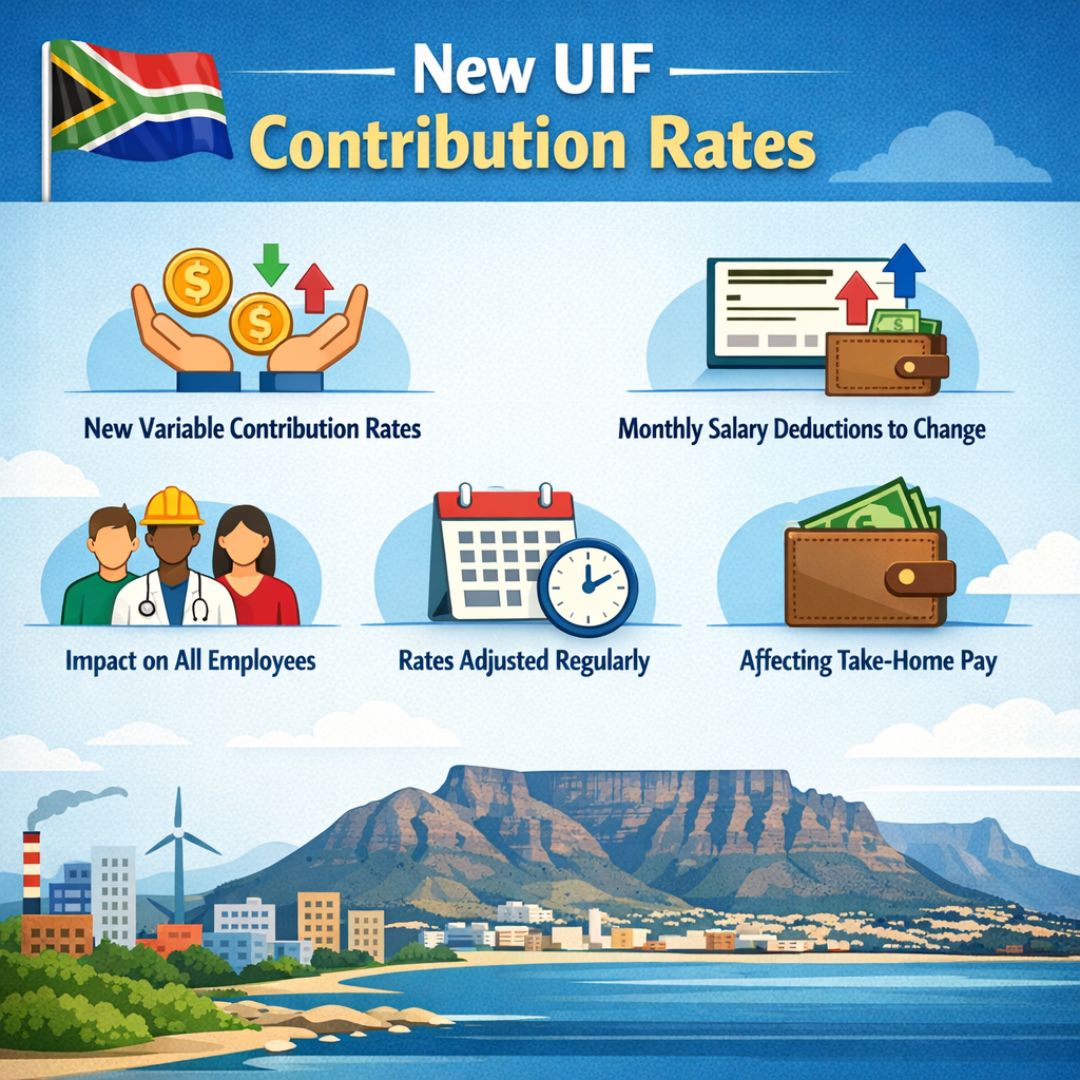
South African workers are once again facing changes to their take-home pay as updates to the Unemployment Insurance Fund (UIF) contribution rules come into focus. The proposed adjustments aim to modernise the system, align it with rising wages, and strengthen the fund’s long-term sustainability. While the changes may seem technical, they directly affect monthly salaries, employer deductions, and future benefit claims across South Africa. For employees already navigating cost-of-living pressures, understanding how these new UIF contribution rates work is becoming increasingly important.

How New UIF Contribution Rules Could Affect Pay
The updated UIF framework proposes tweaks that could slightly shift how much is deducted from monthly salaries. For most employees, the focus is on monthly salary impact, especially as caps and contribution thresholds are reviewed. Employers and workers still share contributions, but the recalibration is designed to reflect modern wage structures and evolving employment patterns. While individual deductions may seem small, across millions of workers they help maintain fund stability goals. Policymakers argue that without periodic updates, the UIF risks falling behind economic realities, weakening its ability to support job seekers during downturns or retrenchments.

Why South Africa Is Updating UIF Contribution Rates
At the heart of these changes is the need to future-proof the UIF system. Rising salaries, inflation, and shifting labour markets have placed pressure on existing models, prompting a push for system sustainability focus. Authorities say updated rates help ensure fair worker protection while keeping employer obligations predictable. The changes also support broader labour reforms aimed at balancing worker security with economic growth. By adjusting contribution calculations, South Africa hopes to strengthen its safety net without placing sudden shocks on either employees or businesses.

What Workers and Employers Should Prepare For
Preparation is key as these UIF adjustments roll out. Employees should review payslips closely to understand any deduction structure changes, while employers need to update payroll systems to remain compliant. Communication will be essential to avoid confusion and ensure salary transparency efforts. Although the changes are not expected to drastically cut take-home pay, they reinforce the idea of shared contribution responsibility. Over time, these updates may improve benefit reliability, giving workers greater confidence in the system when they need it most.
Understanding the Bigger Picture
While UIF contribution updates may feel inconvenient, they form part of a longer-term strategy to protect South African workers. Stronger funding supports quicker payouts, wider coverage, and long-term income security during unemployment. For policymakers, the challenge is balancing affordability with benefit reliability goals. For workers, staying informed helps reduce uncertainty and supports better financial planning. Ultimately, these changes signal an effort to keep the UIF relevant in a rapidly changing economy.
| Aspect | Previous Rules | Proposed Changes |
|---|---|---|
| Contribution Rate | Fixed percentage | Adjusted thresholds |
| Salary Cap | Lower ceiling | Higher ceiling |
| Employee Impact | Stable deductions | Slight variation |
| Employer Compliance | Existing payroll rules | Updated payroll systems |
Frequently Asked Questions (FAQs)
1. Who must contribute to UIF?
Most formally employed workers and their employers in South Africa must contribute.

2. Will my salary decrease significantly?
For most workers, any change is expected to be minimal rather than dramatic.
3. When will the new UIF rates apply?
The revised rates will apply once officially approved and implemented.
4. Do higher contributions mean better benefits?
Yes, stronger funding helps ensure more reliable UIF benefits when claimed.