South Africa is entering a pivotal phase in how it defines work, ageing, and financial security. With policymakers updating the retirement age framework for 2026, long-standing assumptions about stopping work at 67 are being reconsidered. The changes reflect economic pressures, longer life expectancy, and the need to keep pension systems sustainable. For workers, employers, and retirees alike, this shift is more than a technical adjustment—it affects career planning, savings strategies, and expectations around later life. Understanding what is changing now can help households prepare calmly rather than react at the last minute.

South Africa Signals a Shift in Retirement Age Policy
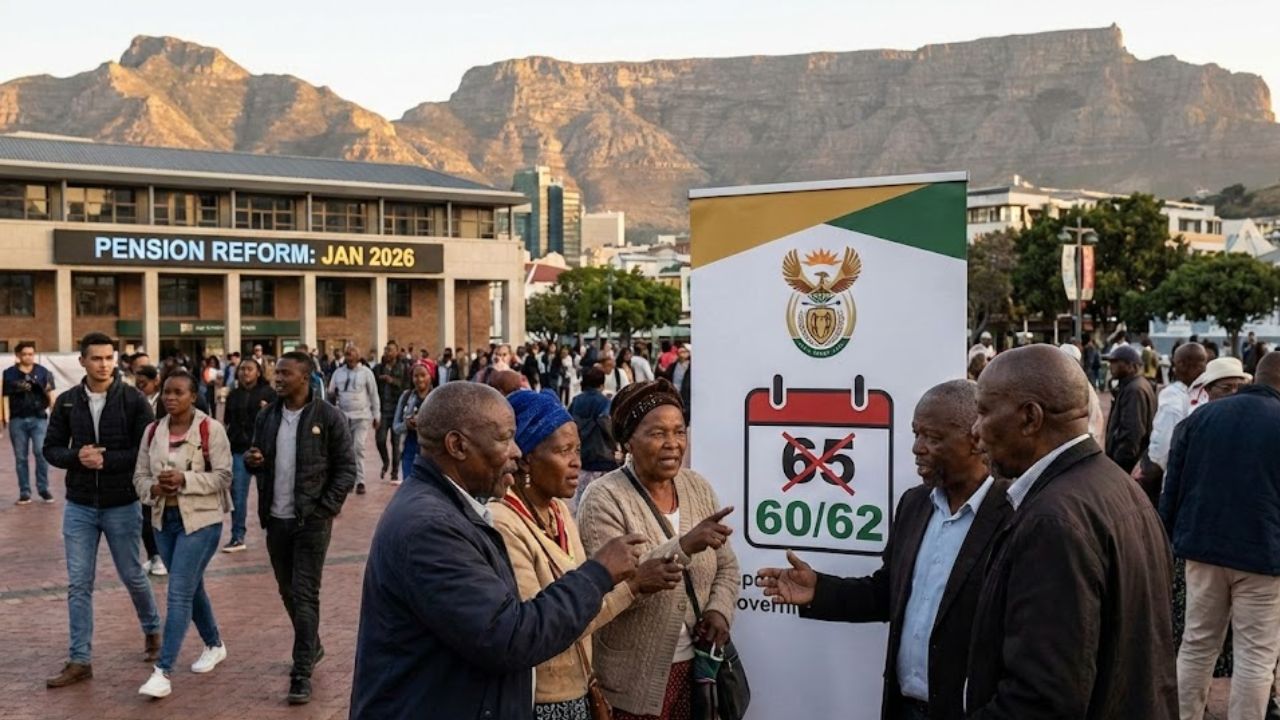
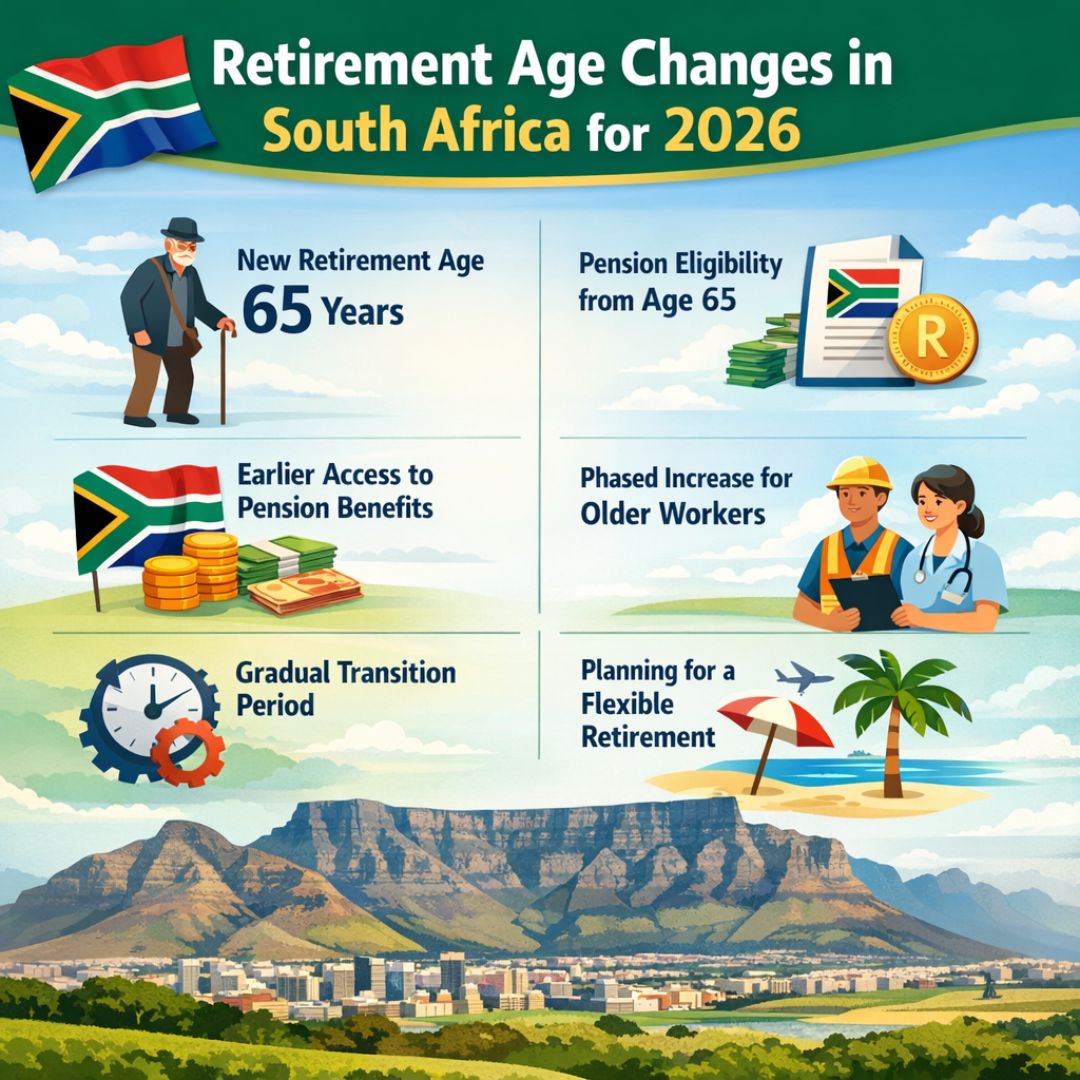
At the heart of the reform is a clear retirement age shift designed to bring South Africa closer to global norms while reflecting local realities. Officials have pointed to rising life expectancy and fiscal strain as reasons to revisit eligibility thresholds that were set decades ago. Rather than a sudden jump, the framework emphasizes gradual change and policy alignment across public and private sectors. For many workers, this means planning for longer working lives while rethinking skills, health, and savings. The intent is to smooth transitions instead of forcing abrupt exits from the workforce.
How Pension Eligibility Rules Are Being Reworked
Alongside age adjustments, the government is refining how state pension access is determined. Updated criteria will place more weight on contribution histories, aiming to reward consistent participation in formal systems. At the same time, means testing rules are being clarified to ensure support reaches those who need it most. These changes are framed as a way to protect income continuity for older citizens without overburdening public finances. For individuals, understanding these details early can prevent surprises and help align personal plans with official thresholds.

What the New Retirement Framework Means for Workers
For employees and employers, the revised framework has implications beyond pensions. Extending careers can boost workforce participation and preserve valuable experience, supporting skills retention in key sectors. Many companies are expected to explore phased retirement options, allowing older workers to reduce hours without fully exiting. On a personal level, households may need stronger private savings buffers to complement public benefits. The message is clear: retirement is becoming a flexible process rather than a fixed date.
Summary and Practical Takeaways
Taken together, South Africa’s 2026 updates point to a more adaptive system focused on transition planning rather than rigid cut-offs. While change can feel unsettling, the reforms aim to build financial resilience and maintain a healthy labour market balance. For individuals, the smartest response is early preparation—reviewing savings, skills, and timelines to improve retirement readiness. Staying informed now allows workers to make choices on their own terms, rather than being rushed by policy shifts later.
| Aspect | Before Update | 2026 Framework |
|---|---|---|
| Standard Retirement Age | 67 years | Under review / flexible range |
| Pension Eligibility | Age-focused | Age plus contributions |
| Means Testing | Broad criteria | More clearly defined |
| Work Options | Full retirement | Phased retirement encouraged |
| Policy Goal | Status quo | Long-term sustainability |
Frequently Asked Questions (FAQs)
1. Is retirement at 67 completely abolished?
No, it is being reviewed and made more flexible rather than removed outright.

2. Will everyone qualify for a state pension later?
Eligibility will depend on age alongside clearer contribution and means rules.
3. Do these changes apply to private pensions too?
Private schemes may adjust in response, but rules vary by fund.
4. When do the new rules take effect?
The updated framework is scheduled to roll out during 2026.